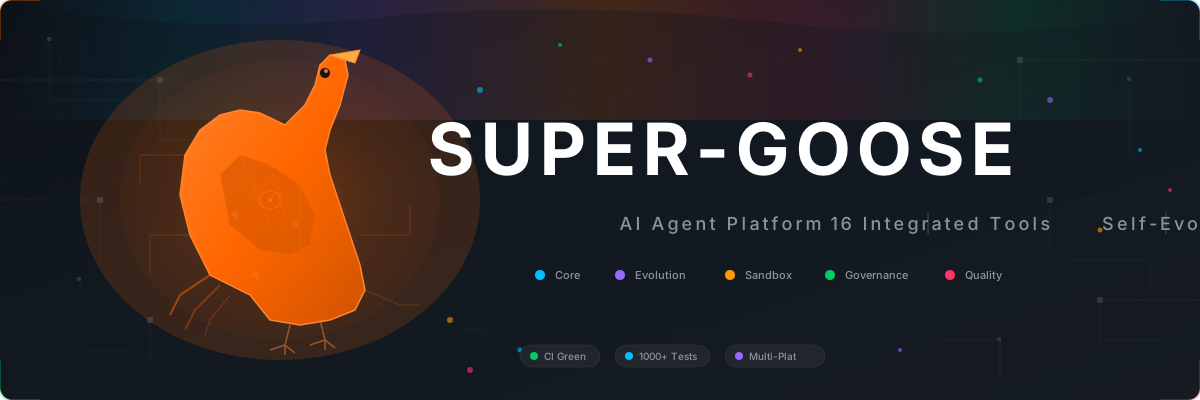
The first self-evolving, voice-enabled, production-grade AI agent platform — 16 integrated tools, 5 specialist agents, overnight self-improvement






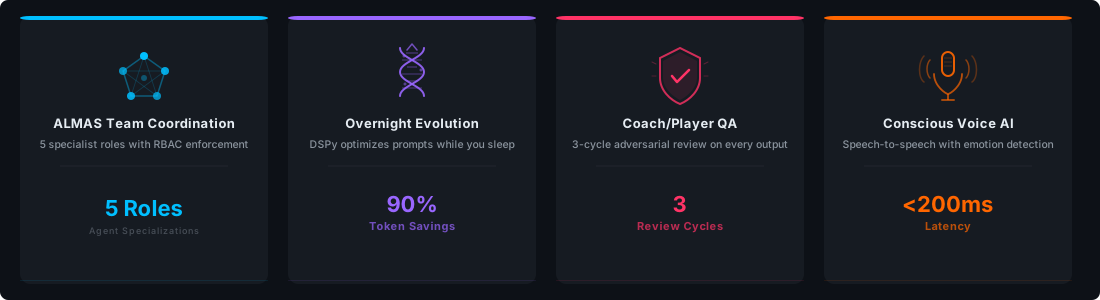
What's New in v1.24.05
Extended thinking, prompt caching, 12 SOTA features, and a major dead-code cleanup.
Native Extended Thinking
Anthropic extended thinking support with --thinking CLI flag and configurable budget
Prompt Caching
80-90% input cost reduction with automatic cache_control injection for system and tool messages
12 SOTA Agent Features
Reflexion, Budget Enforcement, Output Guardrails, Code-Test-Fix, /model Hot-Switch, Adaptive Compaction, Session Search, Auto-Detection, Rate Limiting, Bookmarks, and more
4,454 Lines Dead Code Removed
Comprehensive audit pass removing unused code, fixing warnings, and aligning tests across 27 files
How Super-Goose Works
From voice or text input to production-quality code — every step automated, reviewed, and traced.
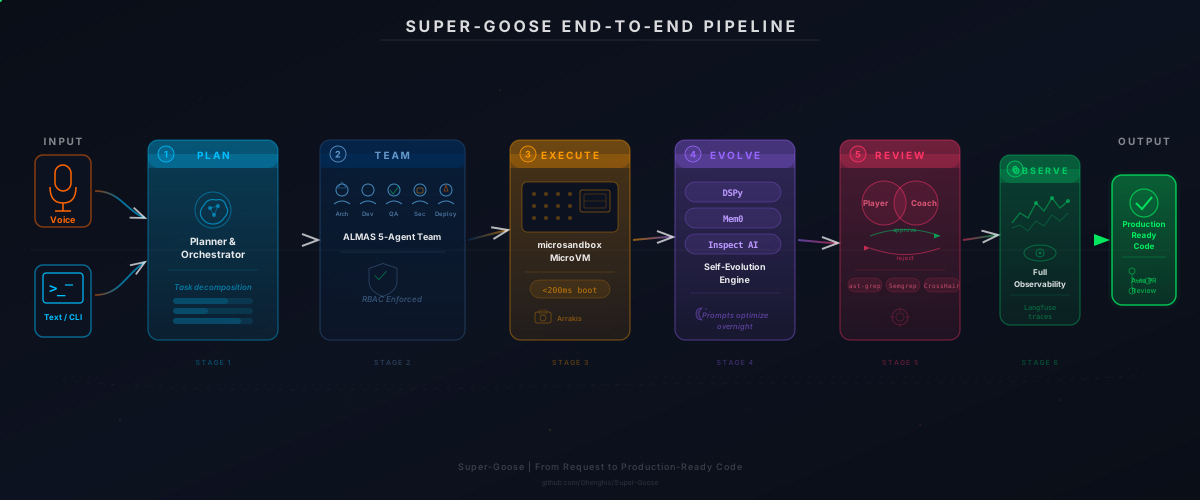
Plan
Your request enters the Planner, which breaks it into structured steps with dependencies
Goose Core, LangGraphAssign
The ALMAS Team Coordinator assigns each step to the right specialist agent
5 agents: Architect, Developer, QA, Security, DeployerExecute
Each agent executes in an isolated MicroVM sandbox with snapshot/restore
microsandbox, ArrakisScan
Every line of generated code passes through security scanning and AST-aware analysis
Semgrep, ast-grep, CrossHairReview
The Coach/Player QA system reviews output in up to 3 adversarial cycles
Coach (precise), Player (creative)Ship
Approved code gets a PR-Agent review and full observability traces
PR-Agent, LangfuseEvolve
Overnight, the Self-Evolution Engine analyzes attempts and optimizes prompts
DSPy, Inspect AI, Mem0The 16 Integrated Tools
Every tool is wired through the ResourceCoordinator with initialization locks, lazy loading, and atomic operations.
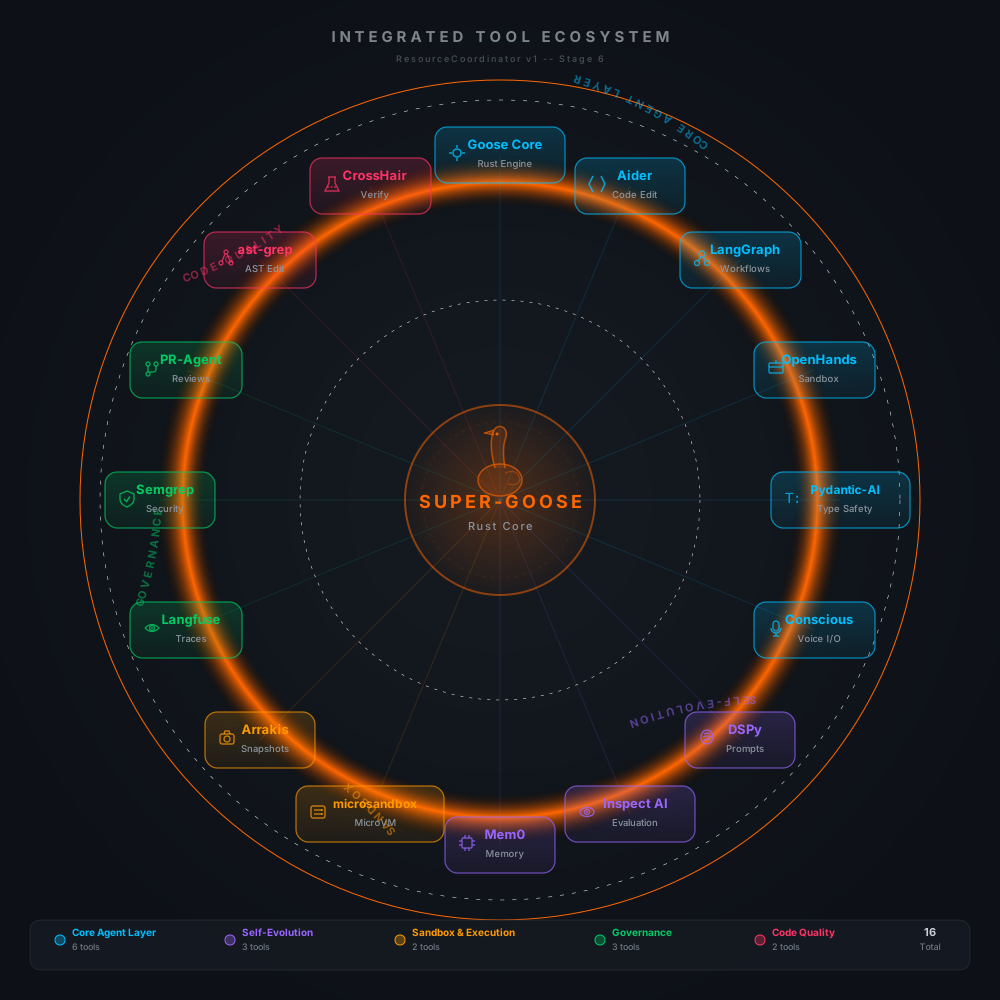
Core Agent Layer
Self-Evolution Engine
Sandbox & Execution
Governance & Observability
Code Quality & Verification
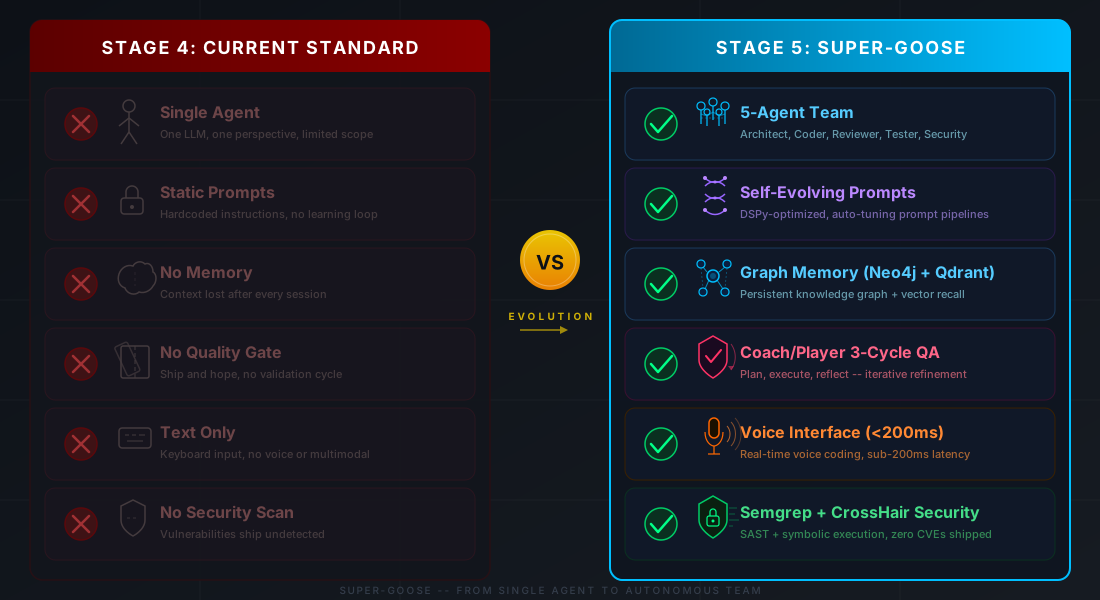
Why Stage 5?
Current AI coding agents operate at Stage 4 — a single model, static prompts, no memory. Super-Goose breaks through to Stage 5.
The ALMAS 5-Agent Team
Every task flows through five specialist agents in sequence, each with role-based access control (RBAC).

Architect
Creates design docs, PLAN.md, architecture decisions
Read all, write docs onlyDeveloper
Writes code, runs builds, creates implementations
Full code accessQA Engineer
Runs tests, checks coverage ≥ 80%, validates quality
Read all, write tests onlySecurity
Runs cargo audit, Semgrep scans, vulnerability checks
Read all, scan tools onlyDeployer
Builds release artifacts, manages deployment
Build/deploy access onlySelf-Evolution: The Overnight Gym
Super-Goose gets better over time — automatically. Every night, the Overnight Gym runs a full optimization cycle.
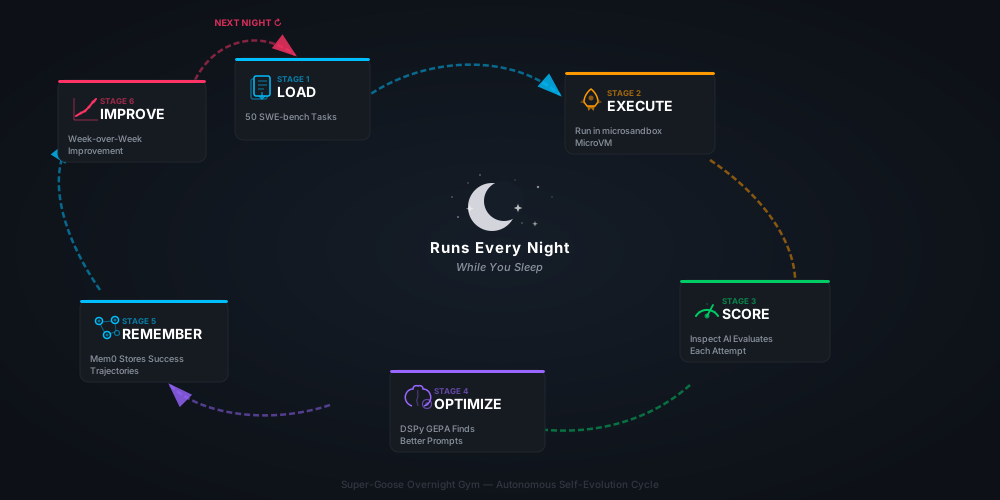
Load
Pulls 50 benchmark tasks from SWE-bench Verified
Execute
Runs each task in an isolated microsandbox MicroVM
Score
Inspect AI evaluates every attempt with model-graded metrics
Optimize
DSPy GEPA analyzes patterns across all attempts, compiles better prompts
Remember
Mem0 stores successful trajectories as entity-relationship graphs
Improve
Week-over-week improvement tracked for regression detection
Coach/Player Quality Gate
Every output goes through a dual-model adversarial review before you see it.
The Player
Temperature 0.7 — CreativeExecutes the task with full tool access. Generates code, tests, and documentation. Optimized for breadth and creativity.
The Coach
Temperature 0.3 — PreciseReviews against quality standards: compilation, tests, security, coverage ≥ 90%. Optimized for accuracy and rigor.
If rejected, the Player self-improves with Coach feedback and retries — up to 3 cycles. This catches errors that single-pass agents miss.
Conscious: Voice-First Interface
Super-Goose speaks. The Conscious voice AI companion provides real-time conversation with emotion detection.
Native speech-to-speech, no transcription step
Real-time conversation
Wav2Vec2 tracking 8 emotions at 85-90% accuracy
Each with 20+ behavioral sliders
CHAT (conversational) vs ACTION (execute via Goose)
SSH, 3D printing, network scanning
Voice Stats
Enterprise Capabilities
Orchestrator
Dependency graphs, parallel execution, priority scheduling, auto-retry
Checkpointing
LangGraph SQLite snapshots. Resume from any state. Time-travel debugging.
Supply Chain
cosign signing, Syft SBOM, Trivy scanning, OpenSSF Scorecard
CI/CD
GitHub Actions pipelines. Smart change detection. All platforms.
Phase 6: Memory System
Cross-session context retention with 4 memory tiers, real vector embeddings, and graph memory — 127 memory tests passing.
| Tier | Purpose | Decay |
|---|---|---|
| Working | Short-term LRU cache for current conversation | 0.70 |
| Episodic | Session history and conversation context | 0.90 |
| Semantic | Long-term facts and knowledge (vector search) | 0.99 |
| Procedural | Learned patterns and procedures | 0.98 |
Real Embeddings
Candle sentence-transformer (all-MiniLM-L6-v2, 384-dim) with hash fallback
Mem0 Dual-Write
Local memory + Neo4j/Qdrant graph memory when available
Auto Consolidation
Working → Episodic → Semantic promotion by importance & access
/memory Command
Stats, clear, and save subcommands — 127 tests passing
Phase 6.3 & 6.4: HITL + Benchmarks
Interactive session control with breakpoints, and a built-in benchmark framework for tracking agent quality.
Human-in-the-Loop
Interactive BreakpointsTool-level and pattern-based breakpoints, periodic check-ins, plan approval gates. /pause, /resume, /breakpoint, /inspect slash commands. Feedback injection mid-execution.
Agent Benchmarks
goose-bench Framework6 builtin benchmark tasks, 5 evaluator criteria (Contains, Matches, ToolCalled, FileExists, Custom). Regression detection with configurable thresholds and performance deltas.
Phase 7: Task Graph & Skill Registry
LangGraph-inspired DAG execution engine and composable skill system with dependency resolution.
Task Graph Engine
DAG with typed nodes — ToolCall, Prompt, Conditional, SubGraph, ParallelFork, Join. Cycle detection (DFS), topological sort (Kahn's), Mermaid export.
Graph Executor
Node state tracking with Ready, Running, Completed, Failed states. Retry support with configurable max attempts. Automatic dependency resolution.
Skill Registry
10 skill categories, typed parameters, search/discovery API. 4 builtins: code-review, test-generator, docs-generator, security-audit.
Skill Pipelines
Chain skills with input/output mapping and validation. Recursive dependency resolution with circular dependency detection.
Phase 8: Extended Thinking & Agentic Swarms
Chain-of-thought deliberation with 7 thinking patterns, and multi-agent swarm orchestration with 6 routing strategies.
Extended Thinking
7 Thinking PatternsConfigurable budget: max steps, duration, tokens, depth. Confidence tracking with auto-termination. 12 unit tests.
Agentic Swarms
6 Routing Strategies10 agent roles, BatchProcessor, inter-agent messaging, EMA performance tracking. 16 unit tests.
Downloads
Pre-built binaries for all platforms — CLI, Desktop, and Docker.
Docker
Pull from GitHub Container Registry — includes both CLI and server binaries.
Pull Image
docker pull ghcr.io/ghenghis/super-goose:latestOr a specific version:
docker pull ghcr.io/ghenghis/super-goose:v1.24.05Run CLI
docker run --rm -it ghcr.io/ghenghis/super-goose:latest gooseInteractive mode with the Goose CLI agent.
Run Server
docker run -d -p 3284:3284 ghcr.io/ghenghis/super-goose:latest goosedAPI server on port 3284 for remote clients.
Image Details
Infrastructure
Backend services run on Docker Compose — one command to start everything.
Neo4j
Graph memory for Mem0
:7474Qdrant
Vector search for Mem0
:6333PostgreSQL
Langfuse database
:5432ClickHouse
Langfuse analytics
:8123Redis
Langfuse cache
:6379MinIO
Langfuse blob storage
:9000Langfuse
Observability dashboard
:3000OTel Collector
OpenTelemetry trace pipeline
:4317